
Stable Diffusion IA online
Inteligência Artificial Acessível a Todos gratuitamente
Ferramentas gratuitas de geração de imagens online
Ferramentas gratuitas de Inteligência Artificial e LLM:
Obras da Comunidade


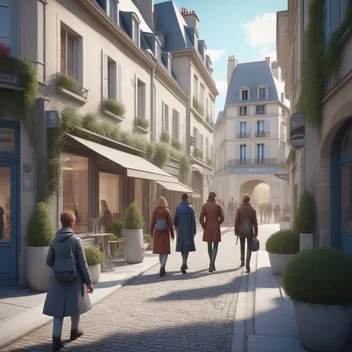
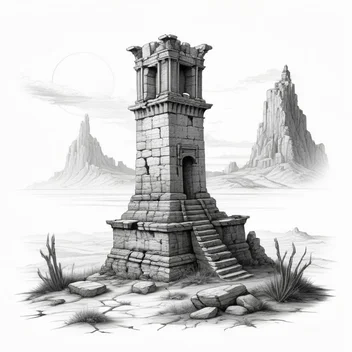











O que é Stable Diffusion?
Stable Diffusion é uma Inteligência Artificial de texto para imagem. Ela gera imagens a partir de uma simples descrição em linguagem natural.
Desenvolvida por StabilityAI , é de código aberto. Ao contrário de modelos como DALL-E ou Midjourney, pode rodar em GPUs comuns. A comunidade SD é muito ativa. Muitos modelos ajustados e complementos estão disponíveis. Você pode até treinar um modelo com seus próprios dados!
Stable Diffusion usa parte do conjunto de dados LAION Aesthetics. Ela é treinada para criar imagens que correspondem aos prompts de texto. Este modelo pode criar arte digital única. Também pode fazer outras coisas como animações e manipulação de imagens.
Você pode ver exemplos na nossa galeria de prompts, Galeria de Arte e navegador de imagens..Perguntas Frequentes
O que é um prompt?
Um prompt é uma frase, geralmente com 350 caracteres ou menos (75 tokens), que descreve a imagem que você deseja gerar.
Prompt negativo é uma maneira simples de especificar o que não deve aparecer na imagem gerada.
What is a negative prompt ?
A negative prompt is a list of words or concepts you want Stable Diffusion to avoid in the generated image. While the regular prompt describes what you want, the negative prompt acts as a filter — steering the model away from unwanted elements such as artifacts, deformations, or specific styles. Common entries include terms like blurry, bad anatomy, extra fingers, watermark, low quality, ugly.
Negative prompts work through classifier-free guidance: the model simultaneously moves toward your prompt and away from the negative prompt, with the CFG scale controlling how strongly both signals are applied. Note that Flux models largely make negative prompts obsolete — their improved architecture handles quality and anatomy natively, so prompt adherence alone is usually sufficient.
How does mentioning an artist influence the result ?
Adding an artist's name to your prompt biases the model toward their visual signature — brushwork, color palette, composition, lighting style, and level of detail. This works because Stable Diffusion was trained on large labeled datasets that include artworks attributed to specific artists. For example, adding Greg Rutkowski tends to produce highly detailed fantasy illustrations, while Monet shifts the output toward soft impressionist textures.
Not all artists carry the same weight in the model — some are strongly represented in the training data, others barely influence the output. The effect also varies between model versions: an artist well-recognized by SD 1.5 may be less prominent in SDXL or Flux. Explore hundreds of artist style comparisons on our dedicated artist reference page to find the styles that best match your creative vision.
O que significa seed?
Seed é um número que inicia o processo de criação. Você não precisa criar esse número sozinho, ele é gerado aleatoriamente se você não escolher um (geralmente escolhendo -1).
Mas se você controlar o seed, pode criar as mesmas imagens novamente, tentar configurações diferentes ou mudar o prompt.
O que é LoRA?
LoRA significa Low Rank Adaptation. É um conjunto de pequenas extensões que ajustam os modelos base.
Você pode usá-lo para ajustar o Stable Diffusion para um certo estilo ou tópico. Você pode misturar muitos LoRAs em um prompt com diferentes pesos. Isso abre possibilidades infinitas para criação.
Posso instalar o Stable Diffusion localmente?
Sim! É necessária uma GPU com pelo menos 6Gb de memória (NVRAM).
Você pode usar modelos personalizados treinados pela comunidade, ajustar os resultados com LoRA e muito mais.
How to install Stable Diffusion locally ?
First, get the SDXL base model and refiner from Stability AI.Next, make sure you have Pyhton 3.10 and Git installed.
Then, download and set up the webUI from Automatic1111.
Put the base and refiner models in this folder: models/Stable-diffusion under the webUI directory.
Find webui.bat in the main webUI folder and double-click it. Wait for it to install.
Finally, open your web browser and go to your local host on port 8760 to use Stable Diffusion.
What is ComfyUI ?
ComfyUI is a node-based graphical interface for Stable Diffusion. Rather than a traditional form, it lets you build image generation pipelines visually by connecting nodes — each node handles one specific step: loading a model, encoding a prompt, sampling, or decoding the image. This makes the entire process transparent and fully customizable.
Compared to Automatic1111, ComfyUI offers more granular control over the generation pipeline and is generally faster, at the cost of a steeper learning curve. It supports all major models: SD 1.5, SDXL, Stable Diffusion 3, and Flux. The ecosystem is extended via ComfyUI Manager, which lets you install hundreds of community custom nodes directly from the interface. Download it from the official ComfyUI GitHub repository.
What is Flux ?
Flux is a state-of-the-art text-to-image model released in 2024 by Black Forest Labs, founded by former Stability AI researchers. It significantly outperforms SDXL in prompt adherence, photorealism, and — notably — the ability to render legible text inside generated images, a long-standing weakness of previous diffusion models.
Flux comes in three variants: FLUX.1-schnell (fastest, Apache 2.0 license), FLUX.1-dev (higher quality, open weights for non-commercial use), and FLUX.1-pro (best quality, API only). The open variants are available on Hugging Face and run locally via ComfyUI or Automatic1111 with the appropriate extension.
Qual é a versão mais recente do Stable Diffusion?
Em 23 de outubro de 2024, a Stability AI lançou Stable Diffusion 3.5 . É o modelo de texto para imagem mais capaz deles, com grandes melhorias nas habilidades de ortografia, desempenho e qualidade.